
What are the common equipment and features of machining?
Machining is a crucial step in manufacturing, involving the process of turning raw materials into the desired shapes and sizes through methods such as cutting, grinding, and drilling. To achieve high precision and efficiency in processing, there are numerous types of machining equipment, each with its own characteristics.
The following introduces several common machining equipment, their functions, features, and the types of components they are suitable for.
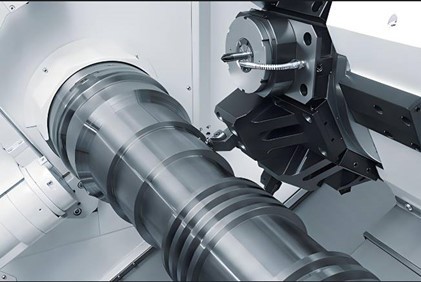
01. Lathe
Function and Characteristics:
The lathe is one of the most basic and common machine processing equipment, mainly used for processing rotational symmetrical workpieces. The lathe performs cutting by rotating the workpiece and the linear movement of the tool. It is suitable for processing cylindrical, conical and threaded parts. The lathe is easy to operate, has a wide range of applications, and can perform both rough and finish machining. It is commonly used in single-piece, small-batch production and for repairing parts.
Applicable Components:
- Shaft parts (such as transmission shafts)
- Cylindrical parts (such as bearing rings)
- Conical parts (such as taper joints)
- Various threads (such as bolts, nuts)
02. Milling Machine
Function and Characteristics:
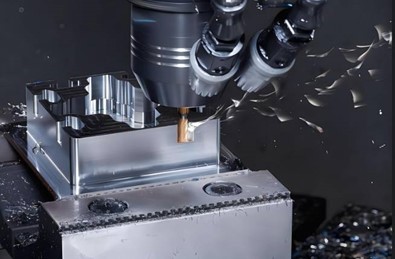
The milling machine cuts the workpiece using a rotating multi-edge tool, processing complex shapes such as planes, grooves, and formed surfaces. There are various types of milling machines, including horizontal milling machines, vertical milling machines, and CNC milling machines (CNC stands for Computer Numerical Control). Among them, CNC milling machines have the advantages of high automation, high processing accuracy, and high efficiency, and are suitable for batch production and processing of complex parts.
Applicable Components:
- Planar parts (such as machine bases)
- Slot parts (such as key slots, guides)
- Complex-shaped parts (such as molds)
- Curved parts (such as impellers)
03. Drilling Machine
Function and Characteristics:
The drilling machine is mainly used for machining holes on workpieces, including drilling, reaming, and tapping. The drilling machine is easy to operate, but it has relatively high requirements for the diameter and depth of the machined holes. Common types of drilling machines include bench drilling machines, vertical drilling machines, and CNC drilling machines. CNC drilling machines can achieve efficient and high-precision hole machining through program control.
Applicable Components:
- Holes on various workpieces (such as bolt holes on flanges)
- Deep hole parts (such as cylinder holes in engine blocks)
- Precision hole components (such as tiny holes on fuel injectors)
04. Grinding Machine
Function and Characteristics:
The grinding machine performs high-precision grinding on workpieces using grinding tools, aiming to achieve precise dimensions and smooth surfaces. The types of grinding machines include flat grinding machines, cylindrical grinding machines, internal cylindrical grinding machines, and centerless grinding machines, among others. Grinding machines offer high processing accuracy and can handle materials with higher hardness, and are widely used in the manufacturing of components requiring high precision and high finish.
Applicable Components:
- Precision shaft parts (such as precision main shafts)
- High-hardness parts (such as hardened gears)
- Planar parts (such as precision mold plates)
- Circular hole parts (such as inner and outer rings of rolling bearings)
05. CNC Machine Tools
Function and Characteristics:
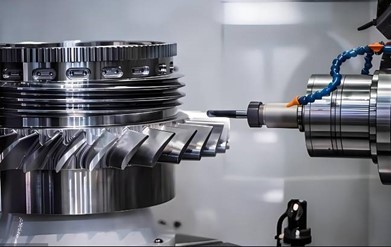
CNC machine tools (CNC machines) are controlled by computer programs and perform automated processing on workpieces. CNC machine tools include CNC lathes, CNC milling machines, CNC grinders, etc. They have the characteristics of high processing accuracy, high efficiency, flexible operation, and strong adaptability, and are particularly suitable for large-scale production of complex-shaped and high-precision parts.
Applicable Components:
- Parts with complex geometries (such as aircraft engine blades)
- High-precision parts (such as precision gears)
- Parts for mass production (such as the casings of electronic components)
- Composite material parts (such as carbon fiber components)
06. Electrical Discharge Machining Machine
Function and Characteristics:
The electrical discharge machining machine (EDM) utilizes the phenomenon of electrical discharge to process metal materials, and is suitable for precise processing of difficult-to-machine materials and complex-shaped parts. EDM includes electrical discharge forming machines and electrical discharge wire-cutting machines. The former is used for processing parts with complex shapes such as molds and cavities, while the latter is used for cutting complex contours.
Applicable Components:
- Mold parts (such as plastic injection molds)
- Hard alloy parts (such as hard alloy tools)
- Micro components (such as miniature bearings)
- Complex-shaped parts (such as mold cavities with complex surfaces)
07. Laser Cutting Machine
Function and Features:
It is suitable for cutting metals and non-metal materials and is widely used in sheet metal processing, advertising production, electronic manufacturing, etc.The laser cutting machine uses a high-energy laser beam to cut, engrave and drill materials. It has high processing accuracy and fast cutting speed. The laser cutting machine does not require contact with the workpiece, has a small heat affected zone, and has high processing efficiency.
Applicable Components:
It is suitable for cutting metals and non-metal materials and is widely used in sheet metal processing, advertising production, electronic manufacturing, etc.- Sheet metal parts (such as sheet metal casings)
- Precision parts (such as electronic components)
- Advertising production parts (such as billboards)
The laser cutting machine does not require contact with the workpiece, has a small heat affected zone, and has high processing efficiency.
Applicable Components:
- Non-metal materials (such as plastic, wood)
08.- Sheet metal parts (such as sheet metal casings)
Ultrasonic Processing Machine
Function and Features:
- Precision parts (such as electronic components)
- Advertising production parts (such as billboards)
The ultrasonic processing machine uses a high-frequency vibrating ultrasonic tool- Non-metal materials (such as plastic, wood)
08. to process hard and brittle materials. Ultrasonic Processing Machine
Function and Features:
It is suitable for processing difficult-to-machine materials such as glass, ceramics, and gemstones.The ultrasonic processing machine uses a high-frequency vibrating ultrasonic tool to process hard and brittle materials. It is suitable for processing difficult-to-machine materials such as glass, ceramics, and gemstones. The ultrasonic processing machine has the advantages of high processing accuracy, good surface quality, and no thermal influence, and is often used for precise micro-processing and special material processing.
Applicable Components:
- Glass parts (such as optical lenses)
The ultrasonic processing machine has the advantages of high processing accuracy, good surface quality, and no thermal influence, and is often used for precise micro-processing and special material processing.
Applicable Components:
- Ceramic parts (such as ceramic bearings)
- Glass parts (such as optical lenses)
- Gemstone parts (such as watch parts)
- Ceramic parts (such as ceramic bearings)
- Gemstone parts (such as watch parts)
- Other difficult-to-machine materials (such as silicon carbide parts)
To provide comprehensive services and more valuable industrial equipment and consumptions to customers.
Get in Touch